
Minimizing Back Tracking Costing Weight (CWBT)
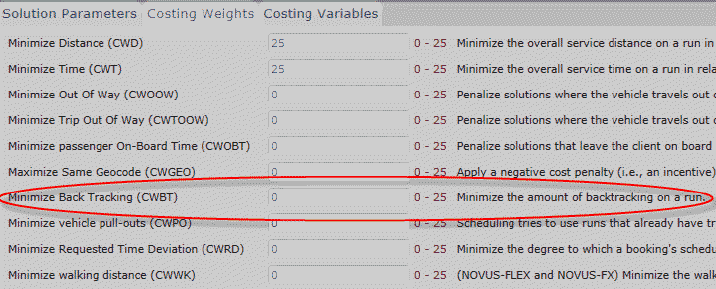
The Minimize Back Tracking costing weight (CWBT) is configured in the Costing Weights tab of the Schedule Parameter and Violation Sets screen.
Before you begin
In the Costing Weights tab, click .
About this task
To calculate backtracking cost for a run:
Procedure
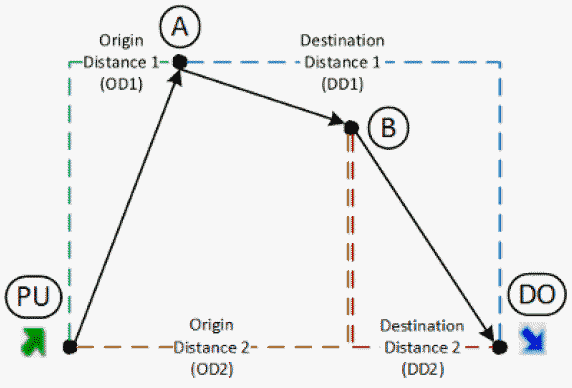
- The distance is measured using triangulation from the pick-up event (PU) to the intermediary event (A) to determine Origin Distance 1 (OD1).
- The distance is measured using triangulation from A to the drop-off event (DO) to determine Destination Distance 1 (DD1)
- The distance is measured using triangulation from PU to B to determine Origin Distance 2 (OD2).
-
The
distance is measured using triangulation from B to DO to determine Destination
Distance 2 (DD2).
-
Calculate the backtracking score from the origin location if OD2 is less than OD1. If
it is, then subtract OD2 from OD1:
if (OD2 < OD1), then (OD1-OD2)
-
Calculate the backtracking score from the destination location if DD2 is less than DD1.
If it is, then subtract DD2 from DD1:
if (DD2 < DD1), then (DD1-DD2)
- Repeat steps 1 to 6 for each pair of consecutive events in between the pick-up and drop-off events for every trip on the run itinerary.
- Add all scores from steps 5 and 6 together for the total amount of backtracking for the run.
-
Multiply the difference between the total backtracking cost from before and after the
new trip was inserted into the itinerary by the Minimize Back Tracking costing weight
(CWBT):
BTcosttrip = (BTcostbefore - BTcostafter) x CWBT