About Trapeze IVR
Trapeze IVR refers to Interactive Voice Response (IVR) systems. Our public transit IVR solution enables passengers to access next bus and schedule information, faring, special bulletins, and policy information using the telephone without having to speak with a customer service representative.
With Trapeze IVR, agencies can save time and money with clients using the phone for automatic and real-time reminders for upcoming scheduled demand response trips. This service helps to eliminate no shows, missed trips as well as save on call center operating costs.
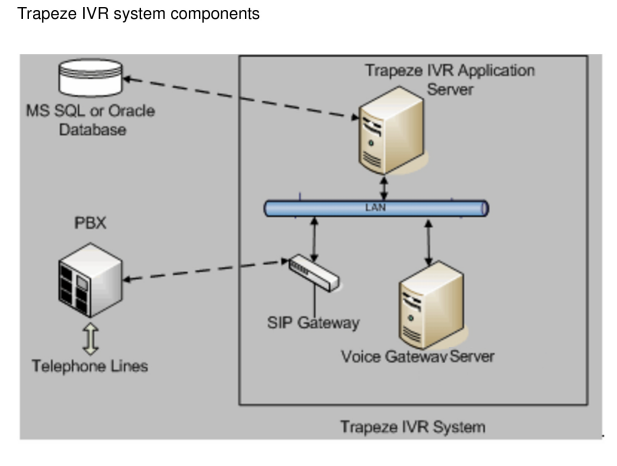
The Trapeze IVR system is comprised of three components:
Voice Gateway: This is a set of software services that handle the interface between the telephone system and the Trapeze IVR application. The Voice Gateway listens for incoming calls, places outbound calls, detects DTMF tones and voice patterns, plays text-to-speech prompts, and plays recorded wav files.
Trapeze IVR application: This is a set of services that handles the interface to the Trapeze database and serves as the front end for the user’s interaction with these services. PASS-IVR is comprised of a Service Shell, Database, and Schedule Server.
Telephone system: For the most part, this refers to the existing telephony infrastructure that your agency has in place prior to the Trapeze IVR installation. In the majority of instances, the existing PBX / ACD is utilized and expanded to include additional phone line capacity for the IVR system. The telephone system may also include some additional elements such as a SIP Gateway, Dialogic card and T1/E1 or analog cards and cables that have been added specifically for your Trapeze IVR implementation. (PASS-IVR supports inbound and outbound calls. Part of the outbound calls are the Notification calls that PASS-IVR performs to remind clients of their upcoming trips.)