
I
import
To copy data produced by another application into a Trapeze database.
incident
Incident subtypes are defined in ancillary data.
incident report
Electronic document that records specific details about an incident. Typically maintained in Trapeze OPS, incidents that need reports can be created from integrated products. For example, Trapeze COM or Vontas TransitMaster.
A single incident report may cover several (related) incidents. Some incident types may automatically cause an incident report to be created, or require that one be manually created, before a dispatcher is allowed to dismiss the incident.
Intelligent Transportation System (ITS)
Interactive Voice Response System (IVR)
- System that artificially generates speech and communicates information from a database to a customer or operator without human involvement. For example, INFO-IVR or OPS Work Assignment Notifications.
- System that allows registered clients to book a trip from registered origins to registered destinations in PASS. This booking system communicates with the Schedule Server to perform live scheduling, giving clients multiple scheduling options.
interchange
(Used in UK) See transfer point.
interface
General term for the interaction point that allows computers to receive information from or provide information to another entity (computer, device, or human). For example, any of the screens in Trapeze applications, or the in-vehicle computer through which operators read electronic manifests.
Some interfaces (for example, the Employee Import screen in OPS) are used to quickly move large volumes of data into the Trapeze database.
interline
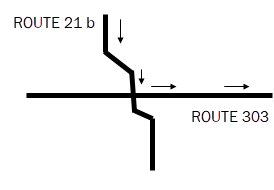
- Segment whose originating timepoint (or prior route segment) is associated with one route while the destination timepoint (or following route segment) is associated with a different route.
- Connecting trips from different routes in the same route group into a single block for efficiency purposes.
interline deadhead
Time and distance a transit vehicle travels between the end of one trip and the beginning of the next when the next trip starts at a different location.
See deadhead.
interlining
See also interline deadhead.
interval
interworking
(Used in UK) See interlining.
in-vehicle navigation
Provides turn-by-turn directions for operators, improving response times.
itinerary
Group of bookings belonging to a single client that either occur on a single day and are used with the Duration of Stay feature (A > B > C) or that occur on different days and are manually linked together. Typically used in PASS.
Also called manifest.